How to Review Missed Trades and Missed Setups
Learn how to track opportunities you did not execute without mixing them into real trade performance.
Tradeloggy Team · August 18, 2026
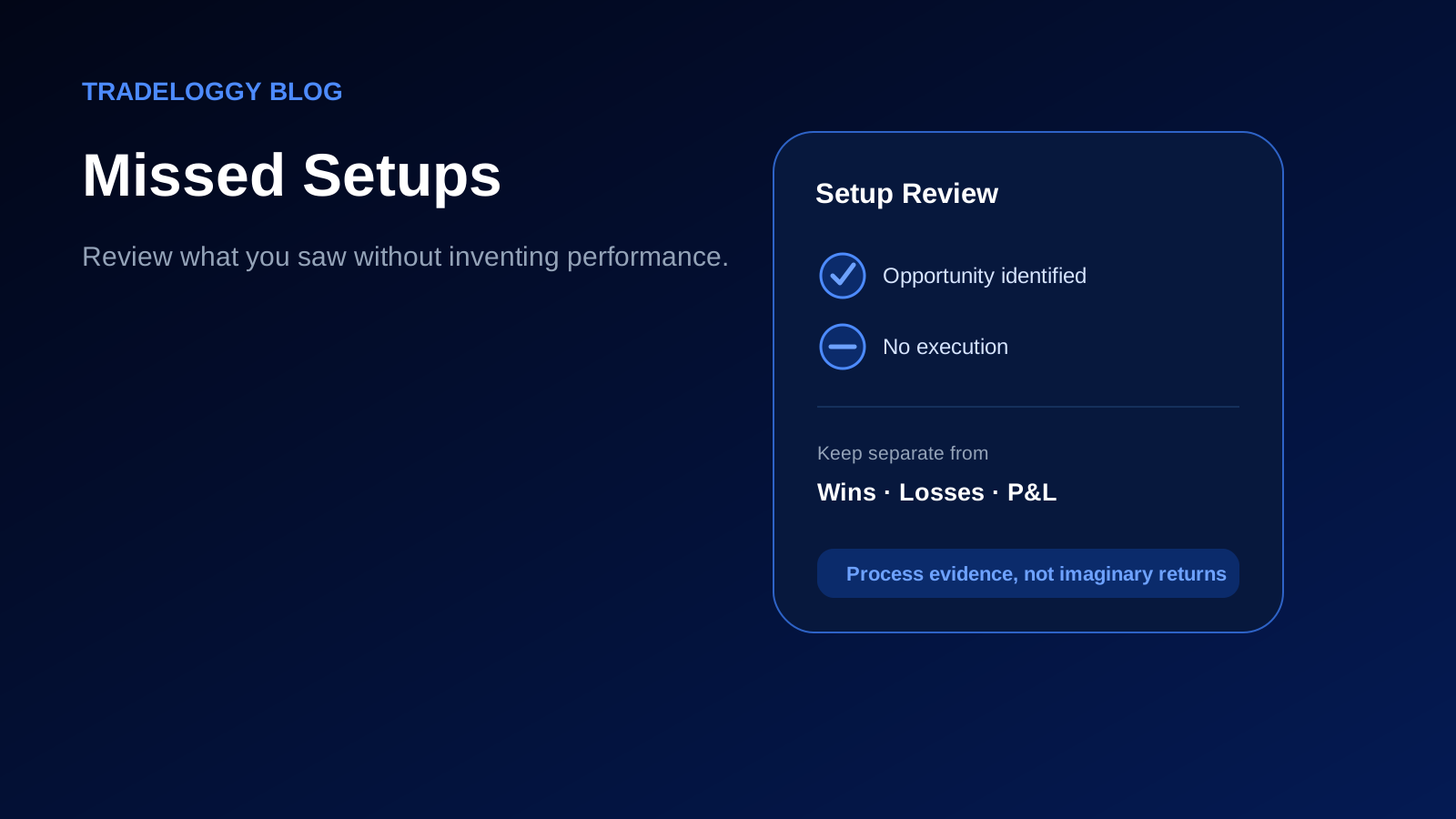
A missed setup is not an executed trade
A missed setup is an opportunity you identified but did not execute. It can be valuable for process review, but it should not be classified as a win, loss, or breakeven trade because no position was opened.
Keeping missed setups separate protects the integrity of performance metrics. They should not affect profit and loss, win rate, profit factor, expectancy, pips, drawdown, trading day counts, prop account limits, or execution milestones.
Why missed setups are still worth tracking
A trader can make mistakes without entering a trade. Arriving late, ignoring an alert, hesitating after a valid signal, or failing to prepare for a session can all affect the quality of execution over time.
A missed setup record allows you to study these problems without pretending that an unexecuted opportunity produced real financial performance.
Separate a missed trade from a disciplined skip
Not every trade you did not take was missed. Sometimes staying out was the correct decision. A setup may have failed a checklist item, exceeded risk limits, appeared outside the trading window, or conflicted with another rule.
This distinction is important. A disciplined skip should reinforce the process. A missed valid setup may reveal an execution, preparation, or psychology problem.
Record the reason the setup was not executed
The most useful field is often the reason. Be specific enough that several missed setups can later be grouped into patterns.
Writing only missed it gives very little information. Writing arrived five minutes late because session preparation was incomplete creates a practical problem that can be corrected.
- Late to the chart
- Hesitated after a previous loss
- Alert was missing or configured incorrectly
- Setup was recognized too late
- Risk conditions were not acceptable
- Checklist rule blocked the trade
- Technical or connection issue
- Intentional skip based on the trading plan
Save the setup context without inventing an outcome
Record the instrument, direction, setup type, session, planned entry, stop loss, take profit, screenshot, and notes when those values were actually known at the time.
Do not fill missing values later simply because the chart makes the answer obvious in hindsight. The record should reflect what was genuinely identified before or during the opportunity.
Do not calculate imaginary profit
After the market moves, it is tempting to say that the missed setup would have made a certain amount. That creates hypothetical performance and can distort confidence.
A missed setup can be reviewed for process quality without adding fictional profit and loss. The goal is to understand why execution did not happen, not to create a second performance history that never existed.
Review repeated causes rather than individual regret
One missed opportunity may be random. Several missed opportunities for the same reason can reveal a system problem.
If valid setups are repeatedly missed because alerts are poor, improve the alert process. If they are missed after losses because of fear, review the psychology pattern. If they are missed because the setup definition is unclear, improve the trading plan.
Use missed setup data to improve preparation
Missed setup review is most valuable when it improves what happens before the market moves. Better preparation may include clearer alerts, a session checklist, chart templates, a written watchlist, or a defined response after a loss.
The best outcome is not taking every possible trade. It is reducing avoidable execution errors while preserving disciplined skips.
Read next